Chronology of the Laws That Eliminated Ethnic Ukrainians as a People, a Legal Category, and a Distinct Nationality
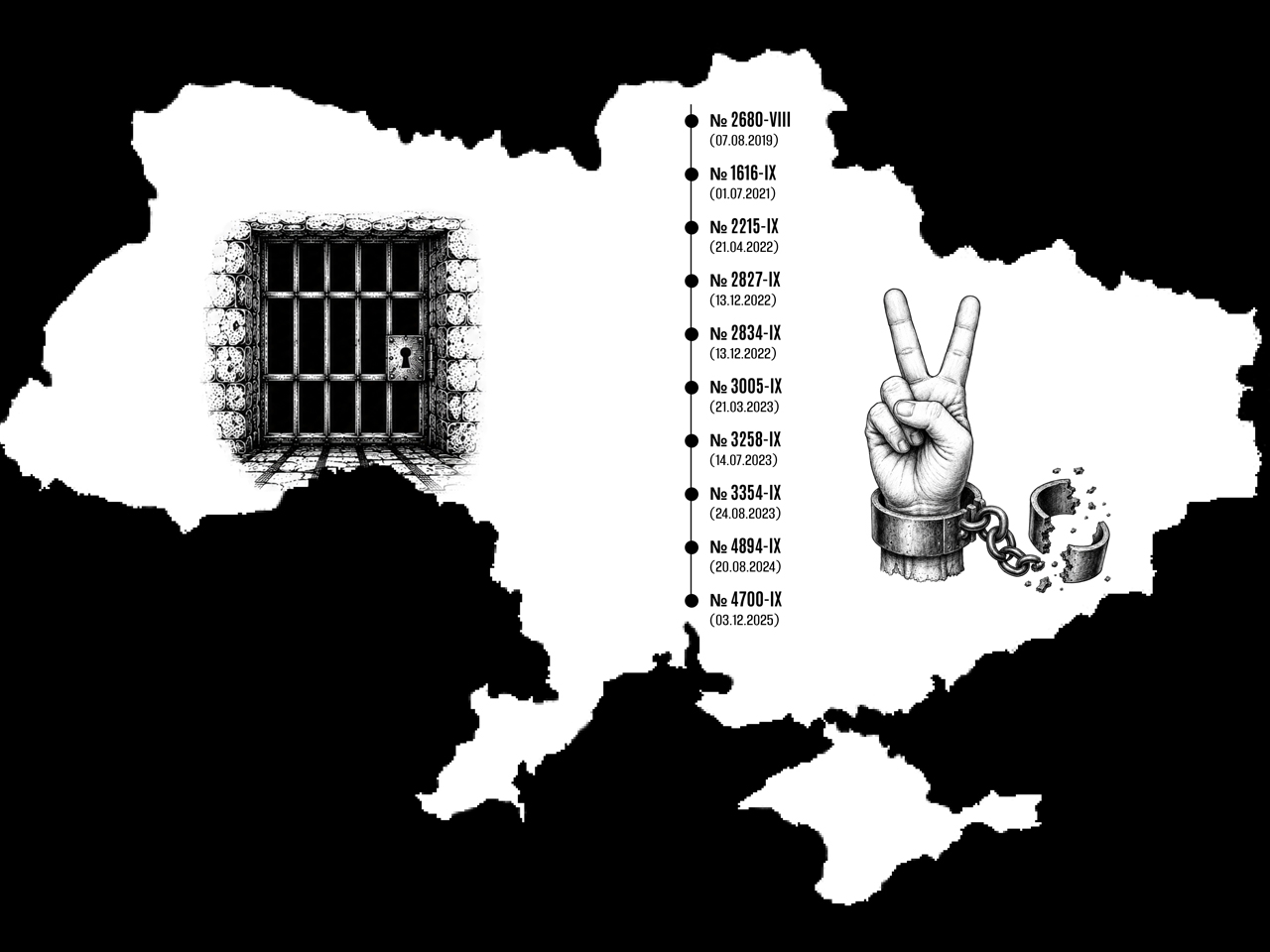
Introduction:
The fact that the Ukrainian People consists of Ukrainian citizens of all nationalities is established in Ukrainian legislation in only two places: the Declaration of State Sovereignty of Ukraine and the Preamble to the Constitution of Ukraine.
The Preamble is the introductory part of the Constitution, a kind of foreword that comes before its articles. It has a founding role and sets out the basic principles, values, and foundations on which the Constitution and the country’s constitutional system are built.
The legal status of the Preamble has always been the subject of considerable legal debate in modern Ukraine. It has never been clearly recognized as a rule of law. Nevertheless, lawyers have used the Preamble as a legal reference when interpreting and determining the composition of the Ukrainian People. And it worked as long as the Ukrainian People consisted solely of citizens of Ukraine, everyone held the same legal status, and no competing legal categories of people existed.
The Declaration of State Sovereignty of Ukraine states that Ukrainian citizens of all nationalities make up the Ukrainian People. However, the Declaration itself does not legally define the composition of the Ukrainian People because it is declarative in nature. In other words, its main purpose is to state the basic principles and intentions of the state rather than to establish legal rules as such.
1. Law of Ukraine No. 2680-VIII (07.02.2019) — gradual devaluation of the Preamble to the Constitution, as well as the devaluation and loss of legal relevance of the Declaration of State Sovereignty of Ukraine through the addition of a political declaration on the irreversible course toward EU and NATO membership.
The Preamble of the Constitution has a constitutive character and contains the wording “on behalf of the Ukrainian People — citizens of Ukraine of all nationalities.” It is precisely this wording that has been used in legal practice as one of the determining criteria for interpreting the composition of the Ukrainian People.
However, after the addition to the Preamble of the Constitution of a political declaration on the irreversible course toward the Euro-Atlantic Alliance and the European Union, this also weakened the very wording that the Ukrainian People consist of citizens of Ukraine of all nationalities. Because such an addition to the Preamble of the Constitution, by itself, does not make Ukraine either a member of NATO or a member of the European Union.
Consequently, if the wording “on behalf of the Ukrainian People — citizens of Ukraine of all nationalities” is used only in the Preamble of the Constitution, but is not reproduced in any law or in any article of the Constitution as a rule of direct legal effect, then, by itself, it does not constitute a legal basis for attributing citizens of Ukraine to the Ukrainian People solely on the grounds that this wording is contained in the Preamble of the Constitution.
Moreover, this law changed not only the Preamble to the Constitution, but also Articles 85, 102, and 116, establishing Ukraine’s strategic course toward membership in the EU and NATO and, therefore, its intention to join a military-political alliance. This, in turn, came into conflict with the Declaration of State Sovereignty of Ukraine, which stated Ukraine’s intention to become a permanently neutral state that does not participate in military alliances.
However, since the Constitution has the highest legal authority, the resulting conflict between the Constitution and the Declaration — effectively deprived the Declaration of State Sovereignty of Ukraine of its independent role as a source of legal regulation, including its provision that the Ukrainian people consist of citizens of Ukraine of all nationalities.
Another important point is that Articles 154–159 of the Constitution of Ukraine establish the procedure for changing the Constitution, but the Constitution does not even provide for the possibility or a separate procedure for changing the Preamble itself.
2. Law of Ukraine No. 1616-IX (01.07.2021) — the recognition of the separate Jewish communities of the Karaites and Krymchaks, as well as the Crimean Tatars, as the Indigenous Peoples of Ukraine by a rule of direct legal effect.
This is the only legislative definition of the concept of a people in the entire legislation of Ukraine. However, other nationalities did not receive such a legal status as a people and exist as part of the people only in the form of a declaration, in contrast to the rule of direct legal effect applicable to the Indigenous Peoples.
Accordinly, following the adoption of this law, the provisions of Article 5 of the Constitution of Ukraine, according to which the people are the sole source of state power, and Article 13 of the Constitution of Ukraine, according to which the land, its subsoil, natural resources, and atmospheric air are objects of the right of ownership of the Ukrainian People, may be interpreted exclusively in favor of the Indigenous Peoples of Ukraine, since their belonging to the people is directly established by a rule of law.
Thereby, a legal asymmetry was created in the question of determining the subject to whom, in accordance with Articles 5 and 13 of the Constitution of Ukraine, state power, land, its subsoil, natural resources, and even atmospheric air belong.
The declarative definition of the people as the totality of citizens in national constitutions, preambles, or other declarative acts, by itself, corresponds to widespread international practice and does not create a legal problem. However, such a legal model preserves its stability only until legal competition is created in the legislation in the form of a rule of direct legal effect, establishing belonging to the people only for separate ethnic groups, and not for all citizens.
Moreover, in the majority of states, the collective right of ownership to land, its subsoil, and natural resources belongs to the state, and not to the people; therefore, the recognition of Indigenous Peoples does not create legal competition in matters of state power and national patrimony.
Moreover, international practice does not know cases of recognizing as Indigenous Peoples groups whose overwhelming majority of representatives, at the time of such recognition, were not citizens of the respective state and permanently resided outside the territory in which they acquired the legal status of an Indigenous People.
For example, in Sweden, the Sámi were officially recognized as an indigenous people in 1977, while in Norway, their status as an indigenous people received constitutional and legal recognition in the late 1980s. However, this does not mean that the Sámi living in Sweden automatically became an indigenous people of Norway, or that the Sámi living in Norway became an indigenous people of Sweden.
Their recognition in each country was connected not only to their ethnic origin but also to the mandatory possession of citizenship of the respective country at the time of recognition. Therefore, this recognition did not create a single transnational legal status that automatically applied to all ethnic Sámi regardless of their citizenship.
Returning to the consequences of adopting this law, the wording in the Preamble, “on behalf of the Ukrainian people — citizens of Ukraine of all nationalities,” lost its previous legal meaning, because the Ukrainian people, in the form of citizens of Ukraine, retained its founding status, but in its current composition was legally eliminated, since categories that did not legally exist at the time when the Constitution was adopted were included in it, and now they are part of the Ukrainian people even without having Ukrainian citizenship.
3. Law of Ukraine No. 2215-IX (21.04.2022) — destruction of the legal continuity of the Ukrainian people while preserving the territorial and state continuity of Ukraine.
By Law No. 2215-IX, 929 acts of the state authorities and state administration bodies of the USSR and 256 acts of the Ukrainian SSR — a total of 1,185 normative acts — were recognized as not applicable on the territory of Ukraine. At the same time, the legislator expressly preserved exceptions for provisions concerning the sovereignty of Ukraine, its territorial integrity within its existing state borders, and its administrative-territorial structure.
Thus, territorial continuity was preserved directly: the state border of the Ukrainian SSR had already been recognized as the state border of Ukraine by Article 5 of the Law on Legal Succession, and Law No. 2215-IX specifically excluded provisions concerning the territory and the administrative-territorial structure from the general termination of the application of Soviet acts. The legal continuity of state institutions had also originally been established by Articles 1 and 4 of the Law on Legal Succession — through the continued functioning of the Verkhovna Rada, state authorities, courts, and the prosecutor’s office until the establishment of the new authorities of Ukraine.
At the same time, Law No. 2215-IX does not contain a specific reservation regarding the preservation of the legal continuity of the Ukrainian people as an independent subject. The Constitutions of the Ukrainian SSR of 1919, 1929, and 1937, as well as a significant body of normative acts of the Ukrainian SSR, were removed from the legal system, whereas, for matters concerning the territory, state borders, and the functioning of state institutions, such exceptions were expressly provided. As a result, Law No. 2215-IX preserved the normative continuity of the territory and the state institutions of Ukraine but did not provide an analogous rule regarding the normative continuity of the Ukrainian people.
4. Law of Ukraine No. 2827-IX (13.12.2022) — the new Law of Ukraine “On National Minorities (Communities) of Ukraine.”
The previous formula for exercising minority rights through established public associations was excluded from the law. They are no longer granted the right to national-cultural autonomy and are never referred to either as a people or as part of the Ukrainian People, but are defined as communities of citizens of Ukraine.
This means that the collective right of an ethnic community as a national minority was transferred into the sphere of individual rights of citizens, while collectively minorities were left only with cultural, social, economic and linguistic rights, with the right to political representation eliminated — meaning the expression of a collective “we” and the protection of political interests on behalf of the community.
In addition, Article 6 of the new law allows multiple self-identification: every citizen has the right to freely decide whether to consider themselves as belonging to one or several national minorities, nobody can be forced to declare their status, and a declaration of will is sufficient to exercise these rights. In other words, belonging arises by declaration, requires no evidence and is not legally verified.
Since an indigenous people of Ukraine, under the law, itself constitutes an ethnic minority within the population (Article 1 of Law No. 1616-IX), one person can simultaneously declare belonging both to an indigenous people and to a national minority.
The previous connection to nationality was also excluded from the new version of the law, under which minorities were recognised as groups of citizens who were not Ukrainians by nationality and who demonstrated a sense of national self-awareness. Now, all citizens who are not ethnic Ukrainians are recognised as national minorities, while the category of “ethnic Ukrainians” itself has no definition in Ukrainian law.
But ethnic Ukrainians do not exist as a separate legal category: they exist only individually, but not as a collective legal category. Therefore, under the legal claims of the Russian Federation that Ukrainians do not exist and that they are all Russians, they de jure remain without their own legal category, and through this legal trick their right to self-determination within Ukraine is blocked, because at the civic level the act of self-determination has already taken place in the form of the creation of the Ukrainian state.
For ethnic Russians, subparagraph 1 of paragraph 3 of Section V of Law No. 2827-IX restricts the right to peaceful assembly, funding of activities, advisory bodies, the Centre for National Minorities, and participation in intergovernmental commissions during martial law and for six months after its termination, which practically and legally blocks any collective expression of will.
5. Law of Ukraine No. 2834-IX (13.12.2022) — introduction of new legal definitions of civic and national identity.
This destroyed the legislative understanding of the Ukrainian nation as a category based on Ukrainian ethnic origin and instead linked belonging to the Ukrainian nation mainly to historical memory, spiritual and cultural values, the Ukrainian language, and folk traditions. This, in turn, changed the legal meaning of Article 1 of Law of Ukraine No. 1582-IV “On Ukrainians Abroad,” which defines Ukrainian ethnic origin through a person’s or their ancestors’ belonging to the Ukrainian nation.
This changed the very legislative content of the concept of “Ukrainian ethnic origin”, since belonging to the Ukrainian nation ceased to be determined exclusively by ethnic origin and was redefined through territorial, linguistic, historical, and cultural identity, extending the legislative understanding of the Ukrainian nation to national minorities, as well as to indigenous peoples regardless of citizenship. Thus, it formed a hybrid model of a civic nation by adding indigenous peoples to it regardless of citizenship, which eliminated yet another attribute of the existence of ethnic Ukrainians as a separate nationality and an independent legal category.
As a result, during martial law, the content of Article 11 of the Constitution of Ukraine was changed not by making direct amendments to the text of the Constitution, but by legislatively redefining the concept of the “Ukrainian nation” used in it.
If it was previously understood that the Ukrainian nation in Article 11 of the Constitution of Ukraine referred specifically to ethnic Ukrainians, since indigenous peoples and national minorities are mentioned separately in the same article as distinct categories, then after the adoption of this law the Ukrainian nation acquired a different legislative content and no longer indicates that the Ukrainian nation in Article 11 of the Constitution of Ukraine refers specifically to ethnic Ukrainians.
6. Law of Ukraine No. 3005-IX (21.03.2023) — legislative definition of the term Ukrainophobia.
Ukrainophobia is now defined as the denial of Ukrainian statehood and the subjectivity of the Ukrainian nation, rather than the infringement of the Ukrainian nationality as an ethnic community. At the same time, the term “denial of the Ukrainian nation” no longer refers specifically to ethnic Ukrainians, since, by Law No. 2834-IX of 13.12.2022, the Ukrainian nation acquired a hybrid legislative content based on geographical origin, historical memory, spiritual and cultural values, the Ukrainian language, and folk traditions.
Moreover, under an ethnic understanding of the Ukrainian nation, the absence in Ukrainian legislation of a separate legal category and legal subjectivity of ethnic Ukrainians falls under the legislative definition of Ukrainophobia, as a result of which the State of Ukraine acquires a Ukrainophobic character.
7. Law of Ukraine No. 3258-IX (14.07.2023) — the legislative transfer of the celebration of the Nativity of Christ from January 7 to December 25.
The legislative transition from the Julian calendar to the Georgian calendar formed the historical image of the dominance of the Jewish religious tradition in the central and eastern parts of Ukraine, and of the Catholic tradition in the western part of Ukraine, and historically devalued the Orthodox religious traditions in the central and eastern parts of Ukraine.
More than 72% of Ukrainians professing Orthodox Christianity historically lost the symbolic significance of their religious traditions, and the legislative transition from the Julian to the Revised Julian calendar consolidated the perception of the Orthodox tradition and its adherents as historically alien and insignificant to central and eastern Ukraine.
And the presence of the institutions of the Orthodox Church of Ukraine (OCU), politically established in 2018, in these territories does not possess historical continuity and connection with the Kyiv Metropolis and cannot serve as evidence of historical belonging or historical right to this territory.
8. Law of Ukraine No. 3354-IX (24 August 2023) — legislative establishment that the preamble of a law does not contain the norm of law.
The Law on Law-Making Activity, where Article 38, Part 2 established that the preamble of a law does not contain the legal norms. This also extended to the Constitution and its preamble as Law of Ukraine No. 254k/96-VR. This finally ended the academic and legal dispute about the legal nature of the Preamble to the Constitution, which had existed throughout the entire history of independent Ukraine, and established by law that the Preamble does not contain rules of law.
But since this was the only place in the current legislation of Ukraine where citizens of Ukraine of all nationalities were defined as the Ukrainian people, who, according to Article 13 of the Constitution, own the land, subsoil, and natural resources of Ukraine, this finally excluded ethnic Ukrainians and national minorities from the composition of the Ukrainian people, leaving the legal status of the Ukrainian people exclusively to the indigenous peoples, because their recognition as peoples is directly established by a rule of law — Law No. 1616-IX.
In international legal practice, the preamble of a Constitution is generally not a rule of law, but this works as long as the people consists equally of all citizens, without separate groups having the legal status of a people. Once indigenous peoples are directly recognized by law as peoples, while others exist only at the level of a declaration, such recognition effectively transfers ownership of the national wealth to them, because under the above-mentioned Article 13 of the Constitution of Ukraine, this wealth belongs to the people, not to the state or the Crown, as in most other countries.
According to paragraph 1 of Section XIV of Law No. 3354-IX, the law enters into force on the day following the day of its publication, but is put into effect only one year after the termination or cancellation of martial law, which indicates the deliberate targeting of the preamble of the Constitution. Such a dual construction is a mechanism for circumventing Article 157 of the Constitution of Ukraine, which prohibits amendments to the Constitution during martial law, allowing the law to be formally adopted during martial law while postponing its full implementation until after its termination. This makes it possible to use the law without full compliance with the restrictions provided for by Article 157 of the Constitution.
Considering the gradual weakening of the Preamble to the Constitution and the Declaration of State Sovereignty by the above-mentioned Law No. 2680-VIII, as well as the change in the legal composition of the Ukrainian People by Law No. 1616-IX, which allowed persons to be included in the Ukrainian People based on ethnic origin rather than Ukrainian citizenship, Law No. 3354-IX became the final stage in the legal destruction of the civic composition of the Ukrainian People.
By removing the normative legal meaning of the Preamble, the law eliminated the only remaining definition of the Ukrainian People as citizens of Ukraine of all nationalities.
As a result, the legal structure of the civic nation was finally destroyed.
9. Law of Ukraine No. 3894-IX (20.08.2024) — elimination of a canonical competitor in the matter of the historical continuity of the central and eastern part of Ukraine.
Under the pretext of its affiliation with a prohibited foreign religious organization, this law created a legal mechanism for terminating the activities of the Ukrainian Orthodox Church — the oldest religious institution of the indigenous population, in the modern understanding — ethnic Ukrainians, which has a thousand-year history, a legal connection with the Kyiv Metropolis, established in 988, and consequently, historical and legal continuity in relation to this territory.
After that, Jewish religious institutions acquired the status of the oldest religious institutions in the central and eastern part of Ukraine and can now substantiate not only their historical presence, but also historical dominance in these regions of Ukraine, and consequently, historical continuity with respect to the religious heritage, and consequently, historical rights to this territory.
The newly established religious institution of the Orthodox Church of Ukraine, created in December 2018 and having received the Tomos of Autocephaly in January 2019, retains its religious function, however, it is not the legal successor of the Kyiv Metropolis and does not have historical continuity in relation to this territory, therefore it is not a canonical competitor to Jewish religious institutions and does not pose a threat.
That is why the destruction of the Orthodox churches of the Ukrainian Orthodox Church (UOC) and the forced transfer of parishioners to the Orthodox Church of Ukraine (OCU) is taking place, where the possibility of conducting religious services is preserved, but historical continuity is already absent, and consequently, the historical right in relation to the territory of the central and eastern part of Ukraine.
10. Law of Ukraine No. 4700-IX (03.12.2025) — the founders of modern Ukrainian statehood were replaced from the Ukrainian People to specific deputies of the Ukrainian Parliament.
After the change in the legal composition of the Ukrainian People, there arose a need to bring the legislation of Ukraine into conformity with the new legal definition of the Ukrainian People and at the same time to eliminate the legal contradiction associated with the belonging of the indigenous peoples of Ukraine to the Ukrainian People regardless of the presence of Ukrainian citizenship.
Maintaining the previous construct, according to which it was precisely the Ukrainian People that was the founder of Ukrainian statehood, became impossible, because the Ukrainian People that founded Ukraine legally ceased to exist precisely in its previous composition, while the current legal composition of the Ukrainian People did not legally exist at the time the Ukrainian state was founded.
For this reason, it was no longer possible to assert that it was precisely the Ukrainian People that was the founder of the Ukrainian state, and there arose a need to bring the legislation into conformity with the new composition of the Ukrainian People.
Therefore, by Law No. 4700-IX, the constituent role was transferred from the Ukrainian People as a collective subject to specific people’s deputies who participated in the adoption of the Declaration of State Sovereignty of Ukraine and the Act of Declaration of Independence of Ukraine, which definitively severed legal continuity with the Ukrainian People in its previous composition.
Note:
It is important not to confuse individual ethnic identity with the collective legal status of the associated ethnic group.
For individual self-identification, a person does not need to prove their ethnic origin through a DNA test, a birth certificate, skull measurements, or any other similar criteria. A person has the right to determine their own ethnic identity under Article 300 of the Civil Code of Ukraine, Article 27 of the International Covenant on Civil and Political Rights, and Article 3 of the Council of Europe Framework Convention for the Protection of National Minorities.
However, the individual right to consider yourself Ukrainian, Russian, Polish, or a representative of another ethnic group does not by itself create a legal category or legal status for this ethnic group in a specific jurisdiction.
For example, a person may consider themselves Slavic. But a Slav does not exist as a separate legal category in national law or international legal practice. A person may continue to consider themselves Slavic, but their rights will be protected only under their legal status as a citizen, because they do not exist as a separate legal category.
There are no separate legal rights of Slavs. In the same way, there are no separate legal rights of ethnic Ukrainians in Ukraine.
In other words, there is no legal category that defines specific rights of ethnic Ukrainians, because ethnic Ukrainians are considered only under their legal status as citizens.
At the same time, national minorities and indigenous peoples have additional rights, in addition to the general rights of citizens. These additional rights are granted to them because of their special legal status, which creates a legal asymmetry and constitutes discrimination and oppression of ethnic Ukrainians on the basis of ethnic origin.
In other words, ethnic Ukrainians can individually identify themselves as ethnic Ukrainians, but a separate collective legal category of ethnic Ukrainians does not exist in Ukrainian law.
Conclusion:
Thus, from 2019 through 2025, ethnic Ukrainians were destroyed as a people at all levels — in the legal, cultural, religious, and historical sense.
And the existence of the direct motive and beneficiaries in the form of other ethnic groups, recognized by law specifically as peoples in the collective sense, legally confirms the existence of an interethnic conflict over the internal redistribution of the territory of Ukraine, which is concealed by the scale of Russian aggression.
Under the legal claims made by the Russian Federation that Ukrainians do not exist as a separate nationality and that they are all Russians, the absence in Ukraine of legal, cultural, historical, and other indicators of the existence of ethnic Ukrainians as a separate community, nationality, and legal category creates grounds for classifying them as ethnic Russians, since Ukrainian citizenship in itself does not determine ethnic origin, while the absence of a separate legal category does not mean the absence of ethnic affiliation in the individual sense.
Consequently, Ukraine’s actions in this case constitute institutionalized complicity in the forced assimilation of unrecognized ethnic Ukrainians into the Russian nationality, which demonstrates the creation of legal conditions for their future assimilation into the Russian Federation.
And through the institutionalized radicalization of Ukrainian culture by Ukraine, the right of ethnic Ukrainians to self-determination is being blocked, as if Ukrainians were not a separate nationality, culture, and community, but a radical ideology of a multinational civil society in which the majority are ethnic Russians rather than ethnic Ukrainians.
This blocks the possibility of separate self-determination for ethnic Ukrainians, since the self-determination of the civic people has already taken place in the form of the Ukrainian state, whereas, when ethnic Ukrainians are classified as ethnic Russians, they acquire a different legal status — the status of a national minority within that state.
As a result, ethnic Ukrainians exist in the legal sphere exclusively as ethnic Russians and acquire the legal status of a national minority which, under Law of Ukraine No. 2827-IX, does not have the right to self-determination and autonomy, does not have separate political rights provided for by law, while special restrictions also apply to a national minority identified with the aggressor state, that is, Russians, including restrictions on the right to peaceful assembly during martial law and for six months after its termination or cancellation, which legally blocks the possibility of collective expression of the will of ethnic Ukrainians for the purpose of their own self-determination.
Moreover, the institutionalized radicalization of Ukrainian culture through the reburial of historical nationalists linked to war crimes against Poles in western Ukraine is an ideal reason for inciting ethnic hostility and for the future seizure of western territories by Poland, Hungary, and Romania under the pretext of denazification, which, in turn, will justify and legitimize the entire Russian invasion of Ukraine.
The scariest thing is that it is artificial intelligence itself that is becoming the principal accomplice in the destruction of the Ukrainian ethnic community — a people numbering in the millions in the center of Europe — by declaring the arguments presented in this article to be disinformation, propaganda, fakes, and conspiracy theories, while at the same time itself acting as the principal source of disinformation that justifies all of the above-described legal mechanisms for the destruction of Ukrainian subjecthood.
Not understanding whom to believe or what is happening, people turn to artificial intelligence for help, and it convinces them that nothing significant has happened, that everything is fine, that Ukraine is building a civic nation and following the course of European integration.
At the same time, artificial intelligence conceals the fact that separate indigenous peoples possessing special collective rights — to autonomy, sovereignty, self-determination, the creation of their own representative bodies, special protection by the state, preservation of their identity, and participation in the management of natural resources — cannot exist within a civic nation.
Moreover, the very reference to the experience of other civic nations is incorrect in this case, because what is of fundamental importance is not the political concept of a civic nation, but the specific legal structure of the state. In Ukraine, the people are not merely a political category but the constitutional holder of the right of ownership over the land, its subsoil, atmospheric air, water, and other natural resources within the territory of Ukraine, as expressly established by Article 13 of the Constitution of Ukraine.
Or, for example, artificial intelligence begins to claim that Ukrainians exist as a distinct legal category and nationality because Article 11 of the Constitution of Ukraine states that “the state promotes the development of the Ukrainian nation”, while indigenous peoples and national minorities are subsequently listed separately, supposedly confirming that the term “Ukrainian nation” refers specifically to ethnic Ukrainians.
However, the AI fails to mention that Law of Ukraine No. 2834-IX (13 December 2022) changed the statutory meaning of the concept of the Ukrainian nation by linking national identity — and, later in the text, the concept of the nation itself — to linguistic, religious, cultural, territorial and historical characteristics, while bringing even indigenous peoples within that concept regardless of whether they hold Ukrainian citizenship.
As a result, the very concept of belonging to the Ukrainian nation has become a kind of hybrid model, no longer defined either by Ukrainian ethnic origin or even by the civic composition of the nation. At the same time, Article 11 establishes neither the legal subjectivity of ethnic Ukrainians, nor their legal status as a people, nor any specific rights or obligations of the state towards the nation.
Or, for example, artificial intelligence cites Article 24 of the Constitution of Ukraine as proof of the existence of equality because it establishes the equality of citizens. But equality of citizens is not equality of peoples. The Constitution contains no separate provision establishing the equality of peoples.
At the same time, the Declaration of the Rights of Nationalities of Ukraine No. 1771-XII guarantees representatives of all nationalities equal political, economic, social, and cultural rights. However, Law of Ukraine No. 1616-IX on Indigenous Peoples treacherously violated the principle of equality of nationalities enshrined in the Declaration by legislatively singling out certain ethnic groups as separate peoples and granting them a special legal status and exclusive collective rights that other nationalities of Ukraine do not possess.
Additionally, artificial intelligence begins to justify this legal construct by claiming that indigenous peoples are vulnerable groups numbering only a few hundred people, while at the same time concealing the fact that, for example, the Karaite religious tradition prohibits the conducting of a population census and that, according to information from open sources, more than 50,000 Karaites live in Israel alone.
And taking into account the religious prohibition on conducting a population census among Karaites and the right of every Jew to self-identification, even the entire global Jewish diaspora in the world can be legalized under this law, since the difference between a Jew and a Karaite is intra-community rather than interethnic.
When citizens of Ukraine are legislatively removed from the composition of the people, while the legal status of a people is granted to ethnic groups whose representatives, as a rule, reside in Israel or Turkey, then together with this legal status they are also transferred the title of ownership of the state — its land, subsoil, and natural resources. At the same time, belonging specifically to an indigenous people does not require Ukrainian citizenship, because the connection of an indigenous people to the territory is determined by blood, not by administrative affiliation with the state.
And if the law on indigenous peoples was supposedly adopted to protect vulnerable groups in occupied Crimea, then what, other than complicity in forced assimilation, can explain the fact that during 12 years of occupation not a single law was adopted to provide the same protection to ethnic Ukrainians in the occupied territories of Donbas and Luhansk?
Therefore, do not allow artificial intelligence to justify the consequences of these laws by presenting them as an “interpretation.” What is documented here is not a subjective opinion about what the legislator allegedly intended, but the specific result to which the adoption and application of these laws have consistently led — both de jure and de facto.
Any attempt to label this result an “interpretation” is a way of avoiding an assessment of the consequences that have actually occurred, substituting the subject of the discussion, and removing responsibility from the legal decisions that led to those consequences.